

The visible feature was only the surface
Applications repeatedly implement subtly different Content-Type parsing and negotiation logic or import larger dependency trees for a focused HTTP-header task.
The system also had to respect concrete constraints. Quoted parameters and malformed header values need predictable parsing. Package output must work across ESM and CommonJS consumers. The public API must stay small and type-safe without runtime dependencies.
My role covered library design and package engineering, with responsibility for typed apis, compatibility, and package distribution.
I turned the constraints into boundaries
Pure TypeScript library and tests; dual ESM/CommonJS build/exports; workspace-linked React documentation/playground that consumes the local package.
Keep runtime dependencies at zero, trading broad convenience helpers for a focused surface.
Ship dual module formats with typed exports.
Colocate docs playground and package so every app build exercises the workspace implementation.
The key decision: Keep runtime dependencies at zero.
The implementation had to prove the model
I delivered the work across the full path: Implemented media-type parsing/formatting and parameter handling. Added content negotiation/validation helpers and type declarations. Configured tsup/package exports and release gates. Built searchable interactive docs/examples against workspace:*.
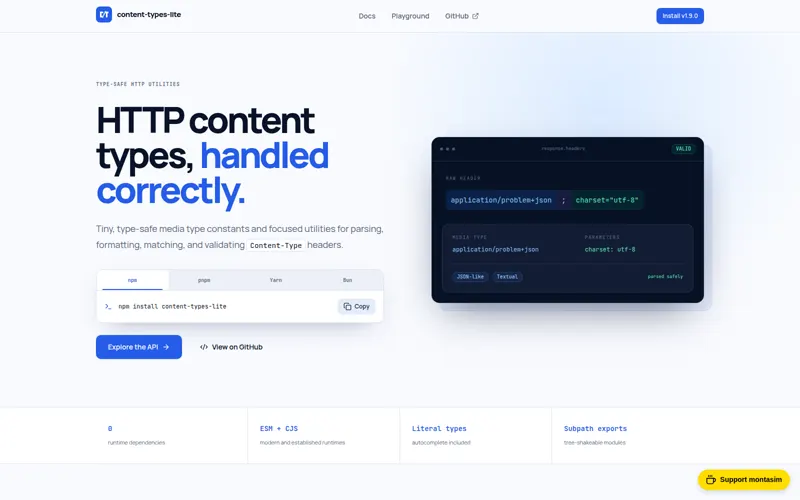
The result is concrete: Consumers can parse and serialize Content-Type values. Validate/compare media types. Use the package from ESM or CommonJS. Test behavior interactively in the documentation app.
The senior engineering lesson was that solving the visible workflow is only half the job. The architecture must also make constraints, failure modes, evidence, and ownership explicit enough for the next change to remain safe.